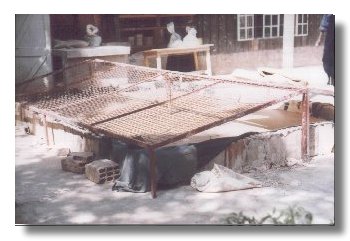
Kazuri were unable to process their local clays in a meaningful way. They needed to produce a homogeneous plastic material with the necessary characteristics of plasticity, known shrinkage, colour and the appropriate thermal expansion values to match their glaze range. They originally produced plastic clay by dry grinding the raw material (containing quartz, feldspar, miscellaneous debris and vegetable matter).
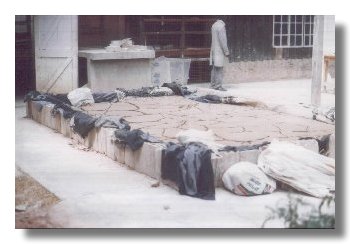
They then mixed the powder with water and poured it into cloth lined troughs. Over time the sun evaporated some of the water and the mix was 'turned' to allow more evaporation. The rainy season gave them even more problems.
Eventually a clay 'porridge' was formed which was the basis of their ceramic operation.